Comprehensive Eye Exam

Many patients think that that an eye exam is only necessary when they have changes to their vision and need to update their glasses. But a comprehensive eye exam is so much more than just checking your vision and getting new glasses. An eye exam evaluates many components that impact vision, ocular comfort, and most importantly, it checks the health of the eyes. Essentially, it's like an annual physical for the eyes.
What About a Vision Screening?
Vision screenings are a great way to quickly assess your distance vision. However, there are multiple other factors that impact your overall vision, such as how well the eyes function as a team, color vision, peripheral vision, depth perception, or near vision that often don't get assessed during a vision screening. Further, vision screenings lack any sort of ocular health evaluation.
Vision screenings lack evaluation by a trained eye care professional.
Vision screenings are often conveniently offered in many places – schools, health fairs, at the doctor's or pediatrician's office, or at the BMV when getting your driver's license. However, even if your pediatrician, internist, or nurse checks your vision, they are not trained in the full evaluation of the eyes and are unable to check visual function and visual health. It's important to know that these types of screenings are not considered an eye exam, and do not replace having the eyes checked by an eye care professional.
Equipment used at vision screenings are limited in their assessments.
Since many vision screenings simply check your visual acuity, or your ability to see 20/20, they are limited to a simple eye chart across the room, where the testing distance and room lighting are often inadequate. Additionally, without equipment such as a phoropter and slit lamp, a full visual and ocular evaluation at a vision screening is impossible.
Without further evaluation, children especially can "pass" a vision screening even though they still need glasses. This can have long-term consequences on visual outcomes, especially when children are not seen until they are older. The American Optometric Association recommends that children receive their first comprehensive eye exam at 6 months of age. Here at Eyes on Dover, we see patients of any age and we encourage parents to bring their children in if they have any concerns about their eyes or vision. The sooner we can evaluate for any visual problems, the better a child's chances of having good visual outcomes.
Why is a Comprehensive Eye Exam Important?
Comprehensive eye exams offer a full evaluation of your eye health and vision.
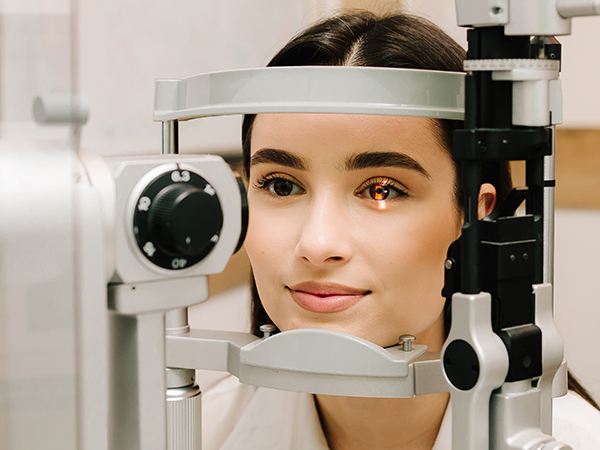
A comprehensive eye exam evaluates the front surface of your eyes and inside your eyes to look for any signs of eye disease like glaucoma as well as systemic disease, like diabetes. The following are not evaluated in a vision screening:
External Exam – This evaluates the front of the eyes like the eyelids, lashes, cornea, and iris.
Internal Exam – This evaluates the inside of the eyes like the lens, vitreous, retina, and optic nerve. Typically this is evaluated when the eyes are dilated. At Eyes on Dover, we have the option to evaluate the inside of your eyes with a digital retinal image. Check out our blog post here to learn more!
Visual Acuity & Refraction – This is a test of your vision and how clearly you are able to see. We aim to improve visual acuity by testing your vision with different lenses (this is called refraction) and it's how we get you a new prescription with glasses and contacts.
Ocular Function – This testing involves checking depth perception, color vision, side vision, how the pupils react to light, as well as binocular function: how the eyes work together and move as a team.
Eye pressure – Testing the pressure in your eyes is an essential part of an comprehensive eye evaluation to check for diseases like glaucoma or even inflammation, which can increase the pressure in the eyes and cause permanent vision loss.

Comprehensive eye exams evaluate your full eye and health history.
"The eyes are the window to the soul." And to the rest of the body! When your eye doctor evaluates your eyes, they take a comprehensive and holistic view of your family history, health history, and even medications to fully evaluate your risks for certain diseases and complications. It's important to provide your eye doctor with accurate information regarding your health, medications, and even lifestyle, like smoking. All of this information helps your eye doctor make accurate assessments about your eyes and health.
The American Optometric Association recommends an eye exam at least annually, and some people may need more frequent follow ups based on your individual needs.
Call or text us at 440-256-6894 to schedule a comprehensive eye exam at our office here in Westlake! We proudly serve the greater Cleveland area.
We can't wait to see you and make sure your vision- and your eyes- are at their best!
Quick Links
Helpful Articles
article_category: products
article_category: psychiatry
article_category: faqs
article_category: cats
article_category: general
article_category: services
article_category: technology
article_category: dogs
article_category: restorative
article_category: vision therapy
article_category: contact lenses
article_category: health
article_category: conditions
article_category: eye surgery co-management
article_category: exotic
article_category: cosmetic
article_category: surgical procedures
article_category: aesthetics
article_category: preventative
article_category: ocular disease management
article_category: eyeglasses
article_category: eye health
article_category: large animal
[]
article_category: psychiatry
article_category: faqs
article_category: cats
article_category: general
article_category: services
article_category: technology
article_category: dogs
article_category: restorative
article_category: vision therapy
article_category: contact lenses
article_category: health
article_category: conditions
article_category: eye surgery co-management
article_category: exotic
article_category: cosmetic
article_category: surgical procedures
article_category: aesthetics
article_category: preventative
article_category: ocular disease management
article_category: eyeglasses
article_category: eye health
article_category: large animal
[]
Flowbite is an open-source library of interactive components built on top of Tailwind CSS including buttons, dropdowns, modals, navbars, and more.
Check out this guide to learn how to get started and start developing websites even faster with components on top of Tailwind CSS.
All Eye Care Services
Find personalized eye care excellence with our comprehensive eyecare services in Westlake, Ohio. From eye exams to advanced diagnostics, trust us for all your vision needs.

Keep In Touch
For non-urgent questions or to learn more about our services, contact us today!
© 2026 Eyes on Dover. All rights Reserved - Accessibility Statement - Privacy Policy - Sitemap
Managed and Designed by 